
In November of 2014, I was driving my Ford Fusion home from my office late at night. We had run a group that evening so I was driving home, later than normal, at 10pm. I saw the huge buck a split second before we collided. I was going 70 mph, and he had skirted around the back of a vehicle so I couldn’t see him until right before impact. He was running at me from an angle off of my passenger side and we hit head on. The impact was staggering (clever, right?…) It didn’t stop my car, so I managed to get to the far right hand shoulder, which took awhile as I had been driving in the far median lane. I realized I was stopped on a curve of the interstate, and there were deer behind me, and I was in the dark with almost no shoulder and I didn’t know if I even had lights working. In the split second in which I saw the buck, I also saw at least three doe on the road as well, so there could have been other cars swerving. Something told me to move immediately and not get out to assess the damage, so I did. I made my totaled car move, despite all of the alarms going off, and at that point I called my husband and absolutely lost it! Hyperventilating, dizzy, the whole nine yards. I managed to drive my totaled car home through a full-on panic attack.
The next night I had to drive on the same interstate again, and it was a nightmare! I cried the whole 30-minute drive home and talked out loud to myself that it would be okay.
Normally I would have forced this down and moved on. I tried to do that, it did NOT work. Acknowledging the need to cry and be a mess was exactly what I needed that night. When my stress hormones calmed down, I was cognitively aware that I was safe, but key areas in my brain still perceived driving as a fight or flight experience, which has continued to this day.
Did I have PTSD? No, not right away. Acute stress disorder (ASD)? Likely. I couldn’t sleep for several nights and had visions of all of the things that could have happened. The buck flipped into my windshield. I swerved instead of driving into him and hit another car. My airbags went off while I was still moving at 70mph. An antler came through my windshield and hit me. Obviously none of those things happened, but I could vividly picture every one of those scenarios.
Acute stress disorder is defined by intrusive thoughts, numbing/dissociation, cognitive impairment, sleep impairment, and feeling emotionally blunted for the four weeks after an event. After four weeks, if those symptoms are still present, they are classified as post-traumatic stress disorder.
Intrusive images and thoughts are a piece of ASD/PTSD. We may be in a safe environment, but we are still scanning the environment for any change, even if subtle. I jump at any shadows on the road now and am getting familiar with the feeling of the adrenaline dump. Even six months out, I’m still jumping at everything. I see every animal on the side of the road because I’m constantly looking. Just this evening, I saw a few deer, several turkeys, and some creature resembling a beaver.
Traumatic stress is everywhere. I see it in my practice in many situations, from traumatic injuries, accidents and losses, to childhood abuse, to infidelity. This traumatic stress tends to make us feel shameful, which tells us to HIDE. IMMEDIATELY. That seems to work, until it doesn’t any longer. It works until you notice you feel too much, or too little. You notice you can’t seem to shake the anxiety. You’ve isolated yourself, which was comfortable at first, and is now lonely and desolate.
The antidote to PTSD-induced isolation is counterintuitive to the injured mind: it is CONNECTION. This connection can be made with a professional therapist, a mentor, or a peer. According to Brene Brown, PhD, connection simply means being seen, heard, and valued. Once this is achieved, the traumatic stress can have a chance to be reduced.
Let’s picture the hypothetical prehistoric wooly mammoth that has had the misfortune to be frozen alive, and compare it to the wooly mammoth who dies naturally and whose body is exposed. A wooly mammoth that dies on the tundra and lies exposed to the elements begins to break down immediately. The body is exposed to wind, sun, heat and chill, and soon it is reduced to the bones. After years of the exposure to the elements, it is reduced to dust. Now let’s replace the wooly mammoth with a traumatic experience. When the traumatic experience is exposed, it will be deconstructed and will wither away.
We can transcend trauma with connection and exposure!
What happens when you keep it locked up tight? Let’s use the frozen wooly mammoth as the example. A researcher believes he sees something in the ice, and begins to slowly thaw the surrounding ice to uncover the perfectly preserved mammoth carcass inside the ice. Because it hasn’t been exposed to the elements, it has been preserved! Some degradation has occurred, but without being available, it hasn’t had much opportunity to follow the natural process of decomposition. Once the carcass is exposed, which requires careful thawing, it begins to break down naturally and slowly. This is what therapists do in practice: we thaw the carcasses of the traumatic memories. We allow people to carefully expose these memories so that they can begin to experience a life without a chunk of space taken up by a frozen mammoth in their brains.
Bottom line: Let people in. Join support groups. Talk about hard things. Let your woolly mammoth have the chance to decompose so that it isn’t present in all of your relationships!
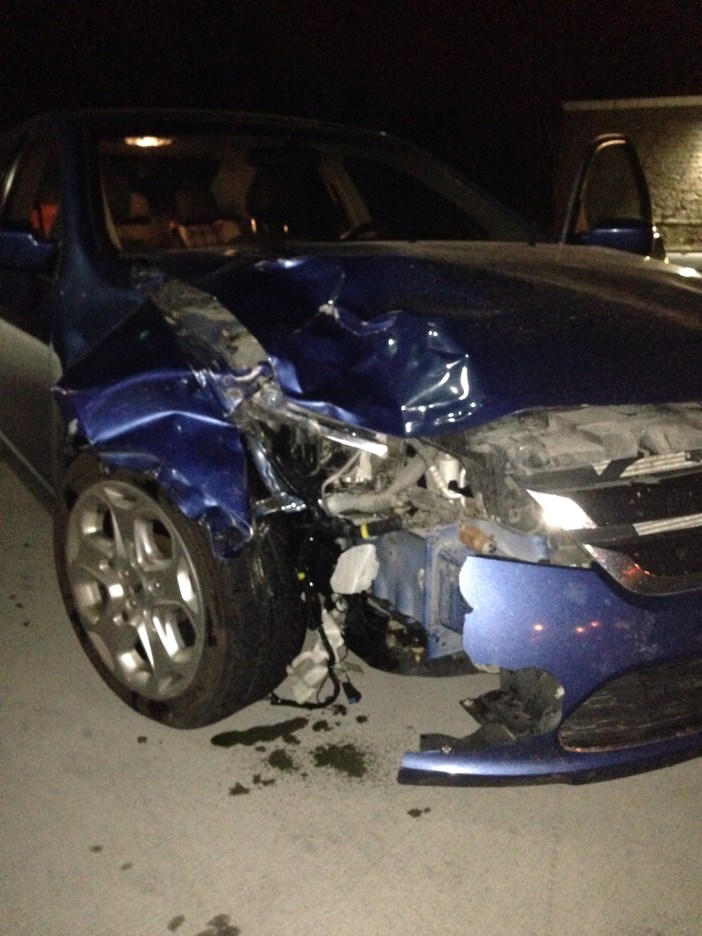
My poor Fusion!

 The Imperfect Therapist
Thank you for the recommendation!
LikeLike