An Uncomfortable Responsibility: Who is responsible for your pain?

Who is responsible for your pain, your hurt, your depression, your anxiety?

The answer is uncomfortable for most… so let’s begin with storytelling:


We’ve all heard the horror story of the person who has ignored physical pain. Let’s say the man ignored the headaches for years. Perhaps the headaches began as infrequent and minor; perhaps they began after some sort of head trauma. Either way, they grow in frequency, intensity, and duration. Finally, he can’t take the pain any longer and sees a physician. The physician runs tests and finds a tumor in the brain. The man then makes a choice.  He must ignore the pain and the severity of the condition, which will then continue to decline without intervention. Or, he can acknowledge that this information gives him the power and control that he lacked before the diagnosis. We don’t know if the tumor is cancerous or not, but we know that ignoring it dangerous. This man now has power. The power is in his awareness of the malady and his treatment decision.  Because he gave it attention, he has the essential (though uncomfortable) knowledge that he has a problem that won’t go away on its own.  He no longer has the decision to plead ignorance or choose comfort, the ramifications will be grave. He now has to accept the responsibility to choose how to navigate this.


The treatment may not be pretty, it may increase the pain, it may have undesirable side effects. It may require surgical excision resulting in a scar.  He pursues the treatment anyhow, because he’s willing to trade the uncertainty of this tumor for the uncertainty of treatment and surgery. Because he endures the pain of treatment, he adds years to his life, which would otherwise have ended within the year. We don’t question this, do we? We don’t wonder why the man didn’t endure the headaches, or why he chose to have surgery.  If we hear of someone in pain, we offer solutions and encourage him to see a physician. We call them a fool if we find out they have had intensifying pain for years and didn’t intervene. We know that if we ignore physical pain, the results will be catastrophic, and potentially lethal. We have an intricate system of nerves that can help us detect specific areas in our bodies that are in need of attention, but it is our responsibility to pay attention to those signals.

Do you see where I’m going with this?

I sit with emotional pain for a living.  I get asked often, “how do you do it? Don’t you get sick of it?”  I actually love what I do, and I’ll continue to love it as long as people continue to want to be better versions of themselves.  While I do hear hard stories and work with traumatic situations, I find my clients are almost always transformed by their pain. That is often the only option for my clients. They’ve become sick of feeling depressed, tired of taking medications that don’t seem to be helping, just generally “sick and tired of feeling sick and tired.”  


Some expect my role as a therapist to be one that reduces their pain and makes them feel better.  That’s not quite how it works in therapy oftentimes. The truth is that I help people slow down, ask them to face their pain and, truly experience the pain and pay attention to it, and help them learn what it is teaching them. THIS is how people can be different at the core, and how we can have the relationships we want to have!  This is how we set boundaries, understand how we contribute to the chaos of our lives, learn better postures and ways of responding, and how we grow.


Just as we do with physical pain, we pay attention to when and how the hurt (or depression, or anxiety, etc) shows up, we learn how it makes us act, and we CHANGE. Generally, with emotions our tendency is to do the opposite: we isolate, we stop talking, and we get really reactive, and we offload our hurt onto those close to us. If we treated our physical pain like we do our emotional pain, we will be incredibly unhealthy and have short and miserable life-spans.


“It’s a pivotal moment when you finally get tired of your own shit.” – unknown


One thing that keeps us stuck in pain (or depression/anxiety) is that we’re so surprised that we feel this way.  In “The Subtle Art of Not Giving A F*%$,” Mark Manson suggests we tend to feel we’re TOO SPECIAL to be depressed, to have anxiety, to have the flu, to have cancer.  When we live life believing we’re special, we are unable to reckon with the reality of what we’re facing because we’re just so shocked that we could actually be facing it.  When a person who doesn’t think he *should* be depressed (but is), he’s wasting valuable energy by being shocked that he is susceptible to a human condition. The person who “did everything right” and still receives a cancer diagnosis must quickly overcome the shock of cancer (and that cancer doesn’t discriminate) and make a treatment plan.  They did their best but they’re not too special for cancer, and no one is too special for depression, anxiety, or pain. Believing we’re above these conditions will keep us ill and will delay an improved quality of life.  We are human, we are going to have physical and emotional problems.  


Who is responsible for my pain?  ME.

We are responsible for our pain no matter who or what we think caused it. We must take control or we will be a victim to our pain because it will drive us to be an angry, closed, hurtful, and broken person. If we don’t take care of our pain, we’ll only end up hurting ourselves or others far worse.  We’ll be someone who numbs and offloads pain instead of someone who takes responsibility for their healing. If someone trips me and I fall and break my arm, I am responsible for seeking out the help I need to be repaired. Only I can understand how much it hurts and decide to have the arm examined. I could suffer each day and stuff my mangled arm into my shirt and pretend the pain and deformity aren’t there, and then I’ll have to deal with the long-term effects of not treating the fracture. The long-term effects are often much more debilitating and painful than the injury itself.


It isn’t the fault of the person who tripped me if I don’t choose to fix my injury. It isn’t the fault of the doctor is unable to properly reset my arm if I let my broken arm be untreated for weeks or months.  It’s not the fault of my husband, who repeatedly encouraged me to go to the ER, but finally gave up because it was clear I wasn’t listening.  It is my responsibility, and only mine, to take action. If I don’t take action, that is on me.

Imagine a world where we all took responsibility for our own pain and didn’t pass it along to those around us? Imagine if we all leaned into the pain, learned how it made us act, took responsibility for it, and repaired relationships that are hurting.  

It starts with you, and it can start right now.  


Profound Insights from the Pasture: Learning boundaries, communication, and self-care from herd dynamics

IMG_0252

I recently made the decision to explore equine-assisted psychotherapy. I love my career as a psychotherapist, but I have felt like there is an essential element I’ve been missing. Therapy is an incredible experience, but sometimes people need more. It isn’t enough to sit and talk about the difficulties that life throws at our feet. It isn’t enough to negotiate how to manage chores and finances in a marriage, to talk about how the affair can be healed, or how to find emotional regulation after the miscarriage or cancer diagnosis. There has been something missing.

Horses and dogs have been my personal therapy since I was a child. I had the good fortune to be able to jump on a horse and gallop away into the fields when I needed to escape. I remember one summer I rode six different horses nearly every day. It was primarily to keep up their fitness and training, but it served me just as much as it served them. I didn’t realize it it at the time, but they had become my emotional regulators and my place of safety and recuperation. They had become the only place where I could escape social pressures, adolescent difficulties, and most importantly, my own swirling thoughts and anxieties. In my practice I sit with people in pain hour after hour, and orient myself to their difficult realities. I hear about the traumas that torment their thought and dreams, their failing marriages, their crippling fears, and their manipulative and narcissistic parents/spouses/bosses/friends. I have found that the optimal way to clear my mind and recharge is to drive straight to the stables where it is just me, the horses, the smells of leather and hay, and the freedom to connect deeply with a horse without hearing a word from them.

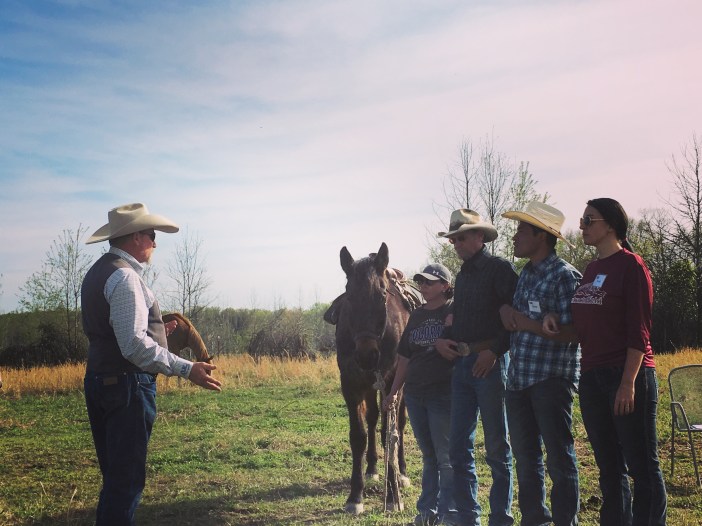
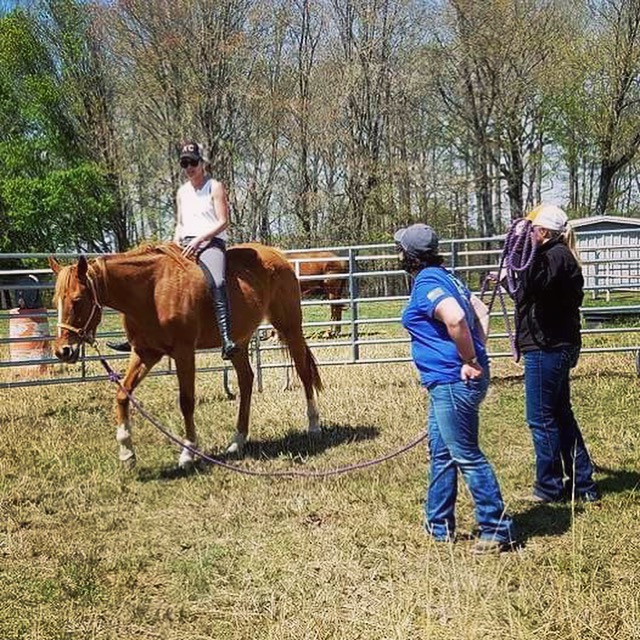
I researched models and had a lovely conversation with the founder of equine-assisted psychotherapy, and chose his certification over other models. His name is Greg Kersten, and he has found the dynamics of herds of horses to be powerfully metaphorical to how us humans get ourselves stuck. He has a grassroots program that is clear, uncomplicated, and effective. This program has been implemented with prisoners, troubled adolescents, celebrity and non-celebrity addictions, veteran programs, couples, families, and more. People walk away with profound insight and strong initiative to implement change their lives. For three days we sat outside in pastures among a herd of horses and observed the herd dynamics. We engaged in exercises where we were to figure out how to execute a task, such as haltering or longeing a horse, complete an obstacle course, and communicate to someone who to saddle a horse using only words and no gestures or illustration. Some had very little experience or none at all with these tasks, but they bravely performed them in front of the group. There are endless metaphors in these simple exercises, and I was amazed at how working with the horses gave us glimpses into the problems in our current lives/lifestyles. Big emotions came up but were managed and overcome. Anxities were acknowledged and put in check. Shame was reckoned with and tasks were completed, and there was no failure. I brought back many concepts from the herd dynamic, and can see a more organic and less complicated lifestyle ahead. Read on if the idea of simplicity, clarity, and balance is seductive for you as well!

IMG_0254

Greg taught us his principles of pressure/pain response, attention vs. at ease, and congruent communication.  The principles are his intellectual property and were formed from years of observation.  I’ve taken them and expanded upon how they relate to our everyday lives.

Lessons learned from observing herd dynamics and in working with the equine-human connection:

1. Horses need for our communication to them to be congruent, this is crucial for building trust. They don’t care about our promises or best intentions, they respond to how we actually are in the moment. Our verbal and non-verbal communication must be delivering the same message. You can’t be agitated and expect the horse to respond to you calmly. Greg told a story where he was in a hurry to go get his horse, and had a hard time catching him. Someone said, “you looked so angry out there!” Greg said that he wasn’t mad at all, just in a hurry to ride. What he realized is that horses don’t understand the difference between a hurry and anger. They interpret our body language and don’t trust us if our calls to “come here” are not congruent with the pace we’re moving at, the volume and intonation in our voice, and the impression our body is giving them.

This is where humans can learn benefit from the dynamics of herd animals. Horses don’t take it upon themselves to figure out the difference between angry and hurry, they need for us to be clear with our message! Horses don’t communicate with each other with opaque messages, ambiguity or manipulative undertones. They are clear and consistent, and this keeps the herd connected and functional. We want people to trust us, but we’re sending opposing messages. How often have you said yes to something when you want too say no? How often do you volunteer your time or abilities when you don’t want to, don’t have time to or don’t have the ability to, and find yourself resentful? Getting clear and saying no actually builds trust in relationships. I want to know that if I ask a friend to let my dogs out, that their yes means yes and I don’t have to worry about how I can reciprocate or feel bad for asking. I want to know that if my husband offers to do something for me that he means it and I don’t have to question why he’s doing it and what his endgame is. I want to trust people when they say yes, and I will trust them when I know they are able and willing to say no.

IMG_0247

2. Horses moved way from pressure and move in to pain. We tend to do the opposite! I adopted two mini horses last month, and one of them, Cash, was the boss-man at his barn. We integrated them into a new herd, and pretty soon Cash was getting his rear end kicked (literally) by the herd leader. As he was getting repeatedly kicked, I noticed that he wasn’t moving away, he was moving IN to the repeated blows! He intuitively knew that if he moved away, he’d be hurt worse and the threat would follow.  We have learned from this principle that we are much safer if we’re very close to the hind quarters of a horse than we are at 3 feet away, as the kick would have much less impact if we are near. We might have immediate pain, by by staying near we actually lessen each blow and have less long term injuries or repercussions.

We have become a culture so focused on preventing pain and maintaining safety. This is helpful in some ways, but we have lost the crucial developmental lesson of how to manage pain when it happens. We are over-protective of ourselves and our children, we are over-involved with our neighbor’s business, we try to take care of our friend and make them feel better, and we are often anxious about how we’re doing too much/too little. We have become so confident that we can avoid our own pain and fix the problems of others that we pretend we aren’t in as much pain as we actually are. As a psychotherapist, even I am not in the business of making people feel better. That is instant gratification and carries no lesson and therefore no growth. I teach clients how to lean into pain and when they can do that, they feel empowered to draw the boundaries they have known in their heart they want to draw. They get permission to be quiet, to slow down, and to stop hustling to be the perfect mom/dad/friend/daughter/son/partner/employee/boss. We have to lean into our pain and stop trying to pretend it isn’t there and that it doesn’t matter, and this is how we reduce the impact of the emotional injury. It is impossible for us to stay in an emotional state forever (anger, sadness, fear, disgust, surprise, love, shame) so we have to learn to tolerate it and lean in when it happens. If we don’t, we feel out of control and at the mercy of the world and our emotions, and become reactive and work too hard to numb.

IMG_0250
3. Horses have mastered the balance of attention and at-ease. They know when their attention needs to be focused, and they know when they can rest and conserve energy. We have no idea how to do this! I was shocked when I watched Cash get in the fight with the leader mini horse, but even more shocked when literally five minutes later they were all grazing calmly. They didn’t retreat to plan how to manipulate or hustle or firm up their position in the hierarchy. They weren’t holding on to a dramatic emotional experience, they weren’t sulking in the corner, they weren’t drawing the other minis into the situation. They simply became at-ease because the crisis was over, and a lesson was learned. Can you imagine if we could all be as clear and consistent as horses? Horses and herds are not unpredictable. We expect the herd to establish it’s hierarchy and have conflict. We expect them to be able to manage it. We don’t get in the middle, and we allow them to experience pain and only treat it if we need to. How can we adopt this mentality in our families/neighborhoods/careers? Imagine a life where everyone worked hard to lean into their own pain, managed their anxiety, didn’t have to “vent” or involve other people into their situations. Of course, there are exceptions to this, but we are so over connected that our relationships are diluted and we don’t know when to handle our own situations or when to ask for help. We don’t handle enough of our own difficulties, we over-involve others, and in turn keep the situation alive too long and makes it much more complex. We must let people face their own pain, and be supportive but not step into theit storm. We give too much attention to our friend’s marriage and not enough to our own. We are so committed to being right and looking good that we lose the relationships that matter the most. We must learn how to properly reorient our attention, draw our boundaries, and choose very carefully what we get involved with.

IMG_0248
4. As much as we struggle with over-attention, we struggle with being at-ease. We have become a culture that tries to fill every spare gap in the schedule with what we think are obligations. We must step back and get very honest with ourselves and ask, “where am I sacrificing what I say matters the most to me, like family and health, and giving large amounts of time and energy to things people ask/demand of me?”

At-ease doesn’t necessarily mean lounging on the couch or sleeping in. It means doing whatever you need to do to recharge and conserve your energy for the next area of focus. At-ease for some is quiet, stillness, and nature. At-ease for others is loud restaurants with friends. Only you get to decide how you can recharge, and only you will enforce that. Finding at-ease space is critical to optimal wellness for each and every one of us. This means ending the desire to please everyone and getting very clear on how what we need to be at our best.

In the first session with every client I do a little demonstration with water, where I pour water from the cup of “life” into the cup of “you.” I fill it up halfway to demonstrate normal stress around being an adult. I add big pours of water to represent the stress of the unhappy marriage, the cancer, the job pressure, the financial stress. As the cup is brimming, I add a drop to represent the PTO meeting you missed or the passive-aggressive text from a friend. The cup is so full that any drop will send you spilling over and therefore you will find yourself raging, crying, spinning in anxiety, being mean, shutting down, etcetera. The initial goal is not to reduce the water coming from the cup of life; rather, it is finding ways to be at-ease and recharge. We must lower the water level in tiny increments so that when the drops come in, we have space to handle them and not immediately spill over. When we have even a small amount of space, we can discern what we need to be focused on and what we don’t.

If any of this has you nodding your head or pining for a new level of clarity, here are some questions for you to lean into. How can you face your threats and pains, and allow yourself to return to at-ease more swiftly? How can you sensitize yourself to your levels of stress and begin to take effective respite time sooner and more often to avoid spilling over? What are the “tells” that you have been at attention for entirely too long? Who in your life brings their difficulty to your feet, and where do you bring your difficulties to the feet of others? Are you leaning into your pain and problems, or are you pretending they don’t bother you? Are you reckoning with the yucky feelings life brings to us, or are you offloading them somewhere by drinking, eating, smoking, being angry, shopping, etcetera?

It is difficult to face these questions, yet there is freedom on the other side.


IMG_0249


The Dilaudid Diaries: Lessons From a Five-Day Hospital Stay

On August 16, 2016, I woke up for my daughter’s first day of kindergarten with a mild throbbing headache. I had worked the day before (I’m a psychotherapist) and felt tired but otherwise fine. There was stress involved with getting my firstborn daughter ready for school, so I assumed it was the cause of the headache. After we did the emotional first-day-of-school rituals, we had to run some errands. My head began to hurt worse and worse, and I asked to go home. As we drove, we hit a bump in the Jeep and I felt searing head pain and saw fireworks behind my eyelids. From that point on, I was in severe pain. I went to bed and stayed there for 24 hours. I became nauseous and was sick all night, and it increased my headache each time I threw up. Any movement would send a fresh wave of pain through my head: sitting up, rolling over, standing, talking, and any light whatsoever would have me in tears.

I went to Urgent Care the next morning and they said it was either a severe migraine or something much more serious. They treated me for a migraine and said if I hadn’t improved in two hours to head to the ER. Three hours later, my husband and kids and I were on our way to the ER, as I felt even worse than I had before the Urgent Care trip. They fast-tracked me in the Emergency Room because they thought I had a subarachnoid bleed in my brain. The CT was negative for a bleed but showed swelling, so they performed a spinal tap. The spinal tap showed acute and severe spinal meningitis, and they pulled four additional amps of cerebrospinal fluid out of my spine to alleviate the pressure on my swelling brain. I was admitted to the hospital and was in isolation for the first two and a half days in inpatient as they were concerned I may have bacterial meningitis, but the results were viral, which is much less scary and has less long-term ramifications than bacterial meningitis does. I spent five long days hospitalized and was followed by many doctors. I begged to be released on the last day because I was getting no sleep and felt as though I could heal better at home. They were very hesitant to allow me to leave as I was still very symptomatic, but thankfully they released me after many promises to rest and recuperate for at least two weeks.

Meningitis is much worse than I ever thought it was. It completely took me DOWN. Aside from the massive headache and stiff neck, I was experiencing cognitive impairment in the form of memory loss, less-than-coherent speech, visual distortions, and at one point I was hallucinating. As a psychotherapist specializing in medical issues (cancer, major illness, medical trauma), I am passionate about teaching people how to support each other in times of crisis. I work with people in the deep dark throes of cancer to help them become more emotionally resilient and how to do life in the new normal. Here are three important mindsets I work to impart upon my clients that were reiterated in my acute illness experience:

1. Emotions will happen, and being positive through it all is unrealistic.

This was a common theme in nearly every one of the 200-ish cancer support groups I ran: everyone wants me to be positive and it’s driving me crazy. I created a presentation on “The Pressure to be Positive in Cancer” and people loved it. I did it several times at Gilda’s Club where I worked, and people began bringing their entire families to it. I was asked to give the presentation at local hospitals, nursing organizations, hospice groups, and was asked to take part in a televised Cancer in KC panel with local cancer experts. I realized that people were HUNGRY for information that allowed them to be human! They craved permission to feel the yucky feelings that are present in every day life, and magnified in cancer. Friends, we aren’t 100% positive on a regular day. Days are full of both good and hard emotions. Cancer and illness are naturally terrifying, and they also impact your physical wellbeing to the point where optimism goes out the window for periods of time. It is impossible to think positive when every bone in your body hurts and the pain medicine is doing nothing. It is hard to look on the bright side when you have a post-op infection that is ravaging your surgical site and threatening to force you back into the hospital. It is very normal to be angry, sad, frustrated, and afraid in these situations. Telling someone to stay positive, fight harder, be happy, etc. will often have the opposite effect. It will often shame them because they aren’t feeling strong, aren’t happy, they feel horrible, or they are scared. Demanding they feel only positive things will actually have them withdraw from people and feel bad about feeling bad.

Personally, I want my friends to be real with me and I want to be able to be real with them. I want them to tell me how they really feel and what they truly need from me. I have friends who can handle that, and they handled plenty of frustrated word-vomit from me while I was hospitalized. They allowed me to vent and be honest with how I felt, and I desperately needed that space. The most important thing is that hey didn’t move into advice-giving mode. They listened, said, “I’m so sorry friend. This just sucks.”

Feeling negative emotions isn’t a bad thing and it means nothing about you. If anything, it means you’re a normal human being who experiences a full spectrum of healthy emotion. The truth is that if we ignore the bad feelings, they begin to RUN us and our interactions. If we pretend we aren’t scared, we find ourselves welling up with tears when they are drawing blood or when you’re being run through the CT machine. If you pretend you’re not angry, you’re snapping at your husband or getting snarky with the nurse. Fred Rogers said, “When we can talk about our feelings, they become less overwhelming, less upsetting, and less scary.” It is better to take roll-call of those negative feelings and let them be there than to ignore them and move forward with forced optimism. Be warned, some can’t handle this kind of authenticity. I am a proud feeler of negative emotions, and most in my life know that, but it makes people uncomfortable. I have decided that it makes people uncomfortable mostly because they don’t know how to “fix it,” it makes them feel helpless to not be able to make me feel better. The truth is that I don’t need to feel better or be distracted from the truth about my illness. I need connection and authentic support.

If the negative emotions threaten to overwhelm you, lock yourself in your room and set a timer for 10 minutes. Allow yourself to sob, yell, cuss, punch your pillow, whatever you need to do. When the timer goes off, take some deep breaths, smooth your hair, and try that positive thinking thing again. You’ve got this.

2.  Eliminate thoughts about “what does this mean about me.”

We have two choices: live in the moment and ask for what we need, or live in the “what does this mean about me” fog. For example, I desperately wanted out of the hospital on Sunday, day 4. I had been cutting back on the IV Dilaudid, convinced that no matter how much pain I was in, I could manage it. I went 8 hours without any pain medication, convinced it would mean I could get out that evening. I began to feel absolutely horrible, and the pain in my head became unbearable. I got lost in the worry about what it meant about me that I needed the medicine: was I weak? Was I a baby? Was I sabotaging my opportunity to go home? I had a fantastic nurse that day who came in as I was sobbing in the hospital bed. She sat with me and listened, and said, “Caylen you’re very sick. You need to be in the hospital and you need the medication. Needing the medicine means nothing about you other than the fact you have a serious acute illness. You have to be honest with yourself or you’ll just be back in the hospital and even more frustrated. “ She came back with the pain and nausea medicine and within a half hour the pain was tolerable. I realized that the ego had to be put away, that I’m not stronger than the meningitis-induced headache, and that nobody was asking me to be. I was putting it on myself, and if I continued to do that and resist the illness, I would continue to be sick. The next day, the doctor and I had a long conversation about the duration of viral meningitis, what is happening in my brain, and how I could possibly manage the symptoms at home. He made me promise that I’d take recovery very seriously and would pay close attention to my body, and only if I promised to take this very seriously would he allow me to leave.  Even the doctors wanted for me to be authentic and honest with how I felt!  They wanted me to be honest with myself, not to deceive myself with the desire to prove that I’m strong.

3. People will want to help: LET THEM!

Whether it’s childcare, house cleaning, giving updates, helping with work, or bringing food, people will offer to help you and your family. That ego pops up again and says, “we don’t need help,” or you will not want people to go out of their way for you. Not only are you cutting off the help you most likely need, you are cutting them off from serving you. People want to help, and it takes nothing away from their lives to allow them to do so. The scarcity mentality says that there is not enough time, money, energy, etc. and that if people give any to you, it takes it away from their own families and it’s simply not true. Often times a cancer diagnosis or major illness will send shockwaves through communities and they will rally behind you, just as you would for someone else. There will be loved ones from afar who want to help, and aren’t able to do what your proximal friends can do, and want to donate money. Please consider allowing someone to do a fundraiser for you! I was against the idea to begin with, as was my husband. There is that, “what does this mean about me” mindset at work again. Was it tacky? Was it in poor taste? My friend Merritt looked at me like I was being ridiculous and told me that people would WANT to donate to help out my family. She also reminded me that life without a month’s worth of pay was a very real concern, as I’m self-employed with no short-term disability insurance at all. Me not being in my office providing psychotherapy meant me not having an income. She wrote a beautiful and humbling narrative, and we went live with a modest goal ($2500). We met that goal within 24 hours, and I was completely blown away by the generosity of every single person. Friends, fellow firefighter families, friends of our parents, and even friends of friends who don’t know us threw in some money.   A local non-profit who is dedicated to helping families knocked down by illness donated $500 simply because they follow the fundraising sites and their mission is to help families in need. I sat in my hospital bed and cried happy tears as I checked my email and had 30 messages notifying me of various donations because I felt so incredibly loved and supported. It was the silver lining of the entire experience.

My hope is that this post touches someone experiencing a chronic or acute health issue.  I pray someone reads this and says to themselves, “I’m not crazy, it’s okay to be mad I have cancer!”  Please be gentle with yourself as you experience whatever journey you’re on.  This goes for caregivers too:  let people take care of you as you care for your loved one!   Let people lean in and support you. Find local support groups for our particular illness.  If you need hep with that, reach out to our practice at http://www.bedfordtherapygroup.com and we will do our best to assist you in finding support.
BEST WISHES!


The Crucial Elements of an Effective Apology

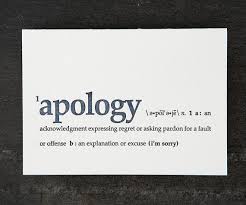
apology


I’m SORRY.

It’s such a simple statement, with the power to be profound, yet so often it falls flat!  Have you ever listened to the various politicians repent for their indiscretion on national TV and find yourself thinking, “whatever.  You’re not sorry, you’re just sorry you got caught.” We see it repeatedly in the media, and we struggle to believe it and trust the person is going to be different. This also happens in relationships; marriages, long-term relationships, friendships, work relationships, and neighbors (to name a few).  It becomes even trickier in relationships because most relationships struggle with communication, and poor communication is spotlighted in an apology and repair situation, and this prevents effective apology.

An effective apology and repair requires a measure of maturity and responsibility to be able to think and communicate clearly and concisely.  You must be able to manage the anxieties that rise in being vulnerable with an apology and move through them. Ineffective apologies are those that fast pitch blame right back at the other person.  While it’s true that often both people have contribution to the situation, the apology won’t be heard if the other person becomes defensive.  Self-preservation and me-centered thinking will only communicate that your apology is to make YOU feel better instead of helping THEM feel better.

When it’s used with the appropriate insight and delivery, apology can be a very powerful experience in a relationship that actually builds trust and resiliency in a relationship. Whether you’re the offender or the offended, understanding the dynamics of effective apology and repair will help you grow from the painful experiences you’ve had or inflicted.   Let’s dive in.

1. I’m sorry for ______.

A general apology will not advance you towards healing.  You have to know what you’re sorry for and communicate that to your partner.  The apology must be clear, and it must be fierce!  You must be prepared to state out loud what you’ve done wrong.  If this imperative part of the apology is skipped, the offended party will not be able to trust that you’re taking this seriously and that you will do your best to not do it again.  Instead of “I’m sorry for last night, I was in a bad mood,” you need to be specific.  A more effective apology includes a clear statement of what it was you’re sorry for and can sound like this:

“I realize that my bad mood and my rude statements to you at the party last night were hurtful.  It is never okay to call you a name or make degrading statements to you, and I know that.”  Do you hear the humility in the statement?  It’s essential to effective repair.  A proper apology privileges the relationship over your own personal discomfort and pride. 

2. I’m sorry because ________.

This is where we have to acknowledge the impact of our behavior on the person we’re apologizing to, and we must take responsibility for our actions.  Without this crucial piece we can not ask people to trust that this won’t happen again.  I work with several marriages that have experienced affairs.  When the offending person doesn’t acknowledge the deep and painful emotions of the other person, we can’t ask them to trust and heal.  Without this acknowledgement they feel unheard, uncared for, and will land in anger and resentment instead of a mindset that could allow healing.   We must acknowledge the boundary or the value that was crossed.

  • Why was it wrong?
  • How did you hurt the other person?
  • What does the other person have to deal with as a result of your actions?

These acknowledgements are vulnerable and uncomfortable, yet essential to create an environment that can foster healing and growth.

3. In the future I will ______.

You’ve acknowledged what happened that was hurtful.  You’ve acknowledged the other person’s feelings and experience.  Now it’s time to seal the deal with a statement about WHY they can trust that you won’t do this again.  First of all, you have to full intend to carry this out.  If you don’t intend to uphold your statement then your apology is fraudulent and will create a new wound in and of itself.  If you’ve identified the value or boundary that was violated , this is where you make it clear that that value is important to you.  Let’s use an affair situation as an example.  It is not as simple as “I won’t betray you again.”  A more effective repair for a deep betrayal comes after a good amount of time dedicated to understanding the impact, and a personal decision to never hurt that person again.  It sounds like:

“I realize now that I haven’t been okay for awhile.  I realize that I didn’t know what to do to feel better, and in that skewed mindset, I became vulnerable to an affair.  Now that I’ve learned more about myself and have accessed feelings that I’ve been suppressing for years, I’m realizing the full extent of my actions on my family and I’m devastated that I did this to you.  I value our family and I value trust, and every decision I make moving forward will be through that lens. Please know that I will be taking my emotional pulse often and will do ____ (talk to you, talk to our friend, attend therapy, etc.) when I sense I’m not ok so that I never lose track of myself again.”

When the offense is serious like a betrayal of some sort, an addiction, or abuse, the “in the future” statement must be coupled with accountability. When a partner can’t trust that you can be accountable to them, a third party can be helpful  As a therapist I play that role for some. When they struggle they come to see me, we talk it through, and they become accountable to me.  We address the anxieties and problems while they’re manageable before they become gigantic problems that lead to poor decisons.

As an apologizer, you must also understand that the person can’t be expected to let go of their anger or hurt right away.  They most likely won’t be able to trust in you right away.  You must be dedicated to your apology and remind your partner of your remorse and your commitment if the offense is deep.  You must also uphold your apology by being in control of yourself, reminding the other person that they are safe, and living out the values you claim.

Go forth, get vulnerable, repair, and love one another!


ANGER 101: What it is, why it matters, and how it can grow our relationships

anger 2

By Caylen Sunderman, M.S., Marriage and Family Therapist

“Emotions were like wild horses and it required wisdom to be able to control them” – Paulo Coelho

You’ve probably heard someone tell you to “think positive” in your lifetime, or tell you that negative emotions are bad or poison. Sometimes it works to think positive, sometimes it lands on a tender nerve.  When someone is EXPERIENCING hurt, pain, shame or anger, and they are told to change their thinking, it can actually exacerbate the negative emotions.  The truth is that we have a full spectrum of emotions, some positive, some negative, but every emotion is important. The old view of emotion is that if you change how someone thinks, you can change how they feel and act. The new view of emotion is that feeling and thinking are inseparable; that thinking and feeling involve the whole brain and can not be cleanly removed from each other. This is hopeful for us therapists and those of us interested in true and sustainable change because it says that we can find a balance of both thinking and feeling. The more we understand feelings and emotions, the more we can connect and be who we want to be.

Emotion can be unconscious (the lens we wear) and conscious (the way we act). Feelings are explicit, and we know we’re feeling them. This is the difference between emotions and feelings: we don’t always know we’re in a state of emotion, but we do always recognize a feeling.  We are ALWAYS in a state of emotion, good or bad, whether we realize it or not! If emotions are the wild horses, they can run rampant without a balance of wisdom to guide emotion.

One of the most common emotions I see in my therapy practice is ANGER. Anger can result from old events or current events. Some people come in to process old anger from situations such as parental misconduct or abandonment; or new anger from things like affairs, betrayal, or job stress. Anger is confusing for people because we don’t like feeling it, and we aren’t clear at times why we’re feeling it.

Why is it important to better understand anger? Because if we don’t, it can be the catch-all emotion. Anger is often a reaction to another emotion, such as shame or hurt. When we get clear on how and when we get angry, we become more emotionally intelligent and attuned to those around us, and our relationships can thrive.

Anger itself isn’t BAD.  When we ‘lean in’ and understand it, we can actually nurture and grow our relationships, or draw appropriate boundaries with people who aren’t helpful to our emotional health.

Anger means “I’ve been violated.” This can be a real or a perceived violation of a boundary or a value system. This is important to understand because we have to learn to sort this out so that we can learn what is real and what is perception. Discernment around the real or perceived violation is where we get control over how our anger impacts our relationships. If we respond to a perceived violation, we can hurt our relationships without intending to. For example, we can be too hard on our children if we perceive them as having bad intentions and our discipline can land as harsh and disconnecting instead of creating growth and learning.  If we get clear on why the child’s behavior wasn’t acceptable (based on a value), they can learn and begin to cultivate their own values.

We have to learn to give anger a “voice,” and if we’re not careful, the voice it is usually given is sarcasm. When I see sarcasm in my office, it is usually because the angry person is unable to express the anger because either they were “trained” by their family that anger is unacceptable, or they are afraid of some level of rejection if their anger is voiced. Sarcasm, when tied to anger, will almost never allow you to get your needs met or lead to effective repair in the relationship. There is actually a LOT left unsaid when sarcasm is present, because it triggers a response from our partner and in turn tends to produce a fight or hurt feelings.

So how do we determine if anger is real or a perception? We identify VALUES and BELIEFS. Anger is real and deserves to be addressed when it is a violation of our values. This is how we use anger to move our relationships forward. If someone steals from us, it makes sense that it is real anger because our trust has been broken. If your partner calls you a name, it is valid because your value of respect has been violated. When we identify our values, then anger can actually be productive because it helps us heal our relationships or draw stronger boundaries with others. Here is a great list of values  to help you get started in identifying your value system.

The moral of the story is that we are supposed to experience all emotions, even the yucky ones like anger.  The more we learn about our emotion and our values, the more choice we get in how we feel and how we do relationships.  Don’t be afraid of anger, get curious about it!

~Caylen Sunderman, M.S., Marriage and Family Therapist


The Pivotal Process of Grieving Yourself

Caylen Sunderman, M.S., LMFT, PLMFT

As a Marriage and Family Therapist in private practice, I work with what I call the “wounded well.” My clients are great people, normal people, people like you and me. They lead a normal life, or work hard to maintain the apparition of a normal life. They have hurts, wounds, pains. They have decided they no longer want to succumb to the pain when it hits. Succumbing to pain can look like different things, such as alcoholism, addiction, anger, aggression, affairs or sexual addiction, to name a few.  The wounded well can live this life until it becomes too hard to manage their poison of choice, and they seek therapy.

The wounded well are moms, dads, attorneys, presidents and vice presidents of companies, nurses, physicians, marketers, pastors, and even therapists. What all of the wounded well have in common is that they have something painful in their past that is haunting them and at times, the pain takes over and they don’t like what happens.  The painful event may be the lack of healthy parenting they received, the death of someone, a violation of trust, a major mental or physical illness (in yourself or someone close to you), having bullied or having been bullied, a terrible accident, and the list goes on.

Often times where there is pain, there is shame. The shame comes up when you think of your past and how you reacted in the moment.  Most feel shame for the armor they employed to cope with all the feelings and aches that were happening.  Perhaps you spent your 20’s zoned out on drugs or alcohol or sexual addiction. Perhaps you lived in a daze of heavy medications. Perhaps you were promiscuous or allowed yourself to be in unsafe situations in which you were violated. Maybe you dated an abusive boyfriend for too long, or allowed people to take advantage of you in some way, because you needed what love they could give you.  When these thoughts and memories arise, as they do, you feel shameful of what you did to survive.

This is who and what grieve when we grieve ourselves.

So how do you grieve yourself and what does that even mean? Here are the general steps, distilled down to the most basic elements.

1. Acknowledge him/her. What was that phase of life like? What did he/she do that incites feelings of guilt or shame? Oftentimes the things the wounded well did were mostly self-destructive, such as drinking, addiction, or self-harm. Occasionally they harmed someone else, either emotionally or physically (possibly in a life-or-death situation, or in a war). Allow yourself to think back to that time and begin to write.  If you don’t write, begin to talk to someone, someone very safe. Write or speak the story of that person. Describe the context, illustrate the person you were, discuss the feelings you had. This isn’t meant to be shareable, it’s meant to define what you’re grieving. In therapy we can’t change anything until we are aware of what we are changing, and this is part of that process. Tell the story of the person you were.

2. Now describe the circumstances leading up to that time in your life. This isn’t about finding excuses. In our field, we have a saying, “there is no such thing as a merit-less monster.” This is a hard concept to chew on, but it means that even our negative actions are meant to gain something positive. Perhaps it’s control you were trying to gain when you had an eating disorder. Perhaps you needed a way to extricate the emotional pain from being entrenched in your wounded soul, so you cut yourself. Is it possible the person who slept around in college wasn’t cared for as a child should be, leaving him or her desperate for the closeness and connection they felt in promiscuity? This is not to excuse your behaviors. It’s to wrap context around the behaviors, because in context, most things make sense.

Most of the wounded well have what we call attachment injuries. This means someone wasn’t “there” or worse, was destructive, when you needed them. Perhaps you turned towards them and they turned away from you or betrayed you. When attachment injuries aren’t corrected, there isn’t a felt safety in relationships and they get off track.

3. Feel. Grieve. Cry. 

Now you reconcile the person you were with the context in which they existed, and you grieve. You grieve the 20 year old you who did the best they could with what you had. You grieve the 35 year old you who drank too much and hurt your family with your drinking. You grieve the 45 year old you who went through an excruciating divorce.  The working concept of failure in my office is that although brutal, once you begin to learn from a failure, it is no longer a failure. This is exciting and hopeful, and then you begin to understand that all past missteps and hurts are healed in the present moment. Grieve that person you were so that they don’t run you any longer. When you’ve grieved yourself, you get choice moving forward: choice in how you act when you feel things, choice in your words, choice in who you offload your hurt to moving forward.  If you wrote out your story, burn it in a fire-pit, in a ceremony of one,  and grieve.

Can this be intense and drawn out? Absolutely. Does it test your stamina and patience? Yes. Can it be life giving and lead to you being the YOU that you want to be? Most definitely!

Emotional wounds are just like physical wounds: treating them isn’t guaranteed to be a pretty and painless process, but it does set you up for proper healing, with antibiotics and a clean line of sutures. However, unlike physical wounds, we don’t treat our emotional wounds properly and they get infected, they fester, that have jagged edges, and they tear open at unpredictable and inopportune times.

Take time, think about the past you. Once you’ve begun grieving him or her, you then also get to celebrate the successes you had along the way! You didn’t get to be you without some successes and wins, yet they tend to be overshadowed by your missteps. This is what we do in therapy through various processes. You tell your story, you grieve the person you were and the things you did, and you let them rest. You no longer suffer under the weight of the old you. You then look around, take a deep breath, and move forward as the loving and beautiful person you are!

Cheers,

Caylen Sunderman, M.S., LMFT, PLMFT

The Secrets To An Amazing 2016!

 Caylen Sunderman and Rita McGaw, both Marriage and Family Therapists, moms, wives, do-ers of life!

new year

As ‘Imperfect Therapists,’ we have seen our share of struggles in the past year!  The struggles have been intense and painful, and there has been so much goodness in between.  Through moves, miscarriage, difficult work situations, hard family situations, incredibly painful pet losses, and more, we’ve learned over and over that we have little control over what we will be dealt this year.  However, every struggle has taught us something about how to do life better, and as we look at the year ahead of us, we put our heads together to come up with ideas for having best 2016 ever!

Expect challenges!

What if we stopped hoping and wishing for a “better year?”  What if we accepted that hard times are part of being human?  That is not to mean we have to prepare for doom and gloom, but if we make the paradigm shift from, “I hope good things happen,” to “good things will happen and hard things will too,” we might be less reactive when the crap hits the fan.  One of the fundamental pieces of successful therapy is when people prepare for challenges, expect them, and are equipped to handle them.  It doesn’t mean it is pretty or neat, and it doesn’t insulate them from feeling the pains of life.  It simply means they’ve developed an ability to “sit with” the pain instead of react to it, and in that process have found a liberating resilience.  I expect that the coming year will be full of challenges.  I also know that it is possible to be happy and fulfilled through those challenges, but I have to be intentional about it.

Learn about yourself!

You may think you know yourself, but do you?  Have you looked at the way you act or react and decided what serves you and what hurts you (or those around you)?  Take a personality test, talk it out with a friend, visit a therapist, whatever you are up for.  The more you learn about yourself, the more control you can have over the way you react to hardships, and you can be proactive about your life instead of reactive.  For example, I’m an introvert, and I’ve always thought that was a negative part of my personality (my husband would probably still say it is!).  However, learning about my personality style has helped me begin to see where being alone and buried in a book is serving and filling for me and when it is actually numbing and/or isolating.  Understanding the tendencies of introverted people has helped me understand how I parent, how I react to stress, and how I do friendships.

Here are a couple links to some great personality tests:

MBTI (Myers-Briggs Type Indicator)

Enneagram Personality Test (Free Version)

Decide what you want to be different in your life first, then set goals to get there!

Theories of change state that we will make a major change when the pain of being the way we are (sad, angry, depressed, overweight, addicted, abused, abusive) outweighs the pain it will take to make a change (calling a friend, repairing a relationship, losing weight, eating well, getting help for addiction, leaving a relationship).  There is pain in both of those situations: there is pain in the things we are doing, and there is pain involved with making a change.  We make big changes when we decide we will take on the pain of change because we simply can not live “this way” any longer.

We’ve all heard, or set for ourselves, the common resolutions: I’m going to the gym 4 days a week, I’m not eating sugar, I’m not drinking, I’m going to bed by 10pm.  The cliché resolution will start to slack by February and be a distant memory by April.  It will be much more helpful to look at how you want your life to be different, and then create a structure to make that happen.  If you want to be healthy, then you can set up a plan to get there.  If you have visualized a healthier you, and have committed to make that happen, you’re more likely to meet the goals that you set for yourself.  If your goal is to connect with your kids, it will be easier to sit down and play a game with them than it would be if you were simply fulfilling a goal.  If your goal is to be healthy so that you can run around with your kids, it will be more motivating than deciding you have to go to the gym five days a week.

~Caylen (read on for Rita’s words of major wisdom!)

HURRY UP AND RELAX

I just speed dated two of my closest friends. We live in different states and don’t see each other much these days. I call them (or text them because I’m shit on the phone) when I am feeling panicked, excited, trapped or triggered but I don’t get to be in their physical presence very often.

We were in the same room together yesterday for about 3 hours. I left my baby with the husband and rolled out with my oldest -who is 4. One of my friends also has kids the same age and they were waiting to welcome us with open arms- strung out on Christmas, over-stimulated and over sugared (much like mine)- but ready non-the-less. The kids were able to play together without constant interaction from us…after about 2 hours. During that first two hours we covered, marriage, health, life goals, dreams for the future, fashion, parenting, cooking, drinking, holistic vs western medicine, self-care, and the holiday family review all while managing, redirecting, feeding and placating three 4ish year olds. The last hour was spent delving into ideological therapeutic goals and life stuff.

We all listened fiercely and spoke with intention.

This Urgency to connect, to be inspired, to evolve, to engage…THIS is what I hope for in the New Year. Life is hard and beautiful and a lot of mundane shit can get in the way of true connection.

Let’s be Urgent. Let’s live Fiercely and Urgently. Let’s connect Fiercely and Urgently in this New Year. Let’s choose to privilege and make time for the people who truly fill our cup, for the hobbies, jobs, life pursuits, food, clothes, mountains…that have us feel vibrant and connected to something honest. I don’t mean urgent in a sense of rushing around and doing things quickly – I mean Urgency of Spirit.

Be Urgent in your Spirit this New YearUrgent to feel the passion of connection around the things/people that excite you. This is my wish for myself, and all of us.

Peace & Love Y’all.

R

7 Ways To Connect With Your Firefighter (or any loved one working holidays)

Caylen Sunderman, M.S., LMFT

The holidays are an interesting an intense season. As a Marriage and Family Therapist, my days in November and December are spent preparing individuals, couples and families for challenging holiday seasons, all while I’m preparing for my own. As we’re all too familiar with, firefighters work holidays, and can even get held over for overtime. This is true for many professions including police officers, healthcare workers, prison guards, security, first responders, and many more. Fire families make many sacrifices for the job, most of the time happily so. If you’re feeling the stress of the holidays or missing your man/woman, here are some tips to grab ahold of the holiday season and be intentional about making it the best it can be:
1. Show your appreciation to your partner, every day. Even if you aren’t feeling jolly and lovey. We all do hard things, but firefighters (police, doctors, nurses, etc) do a different kind of challenging job. It is emotionally challenging, it’s physically challenging, it’s stamina challenging. Try to acknowledge your appreciation for your partner every day, on shift or not. A posture of appreciation will not be lost on them, and they will pick up on it and ideally return the appreciation! Be the happy that they need to recover from a hard shift.
2. Vow to not say something negative to your partner! Start with 24 hours of this challenge, because this is harder than it seems. If it is not kind, don’t say it. If it is critical, attacks their character, or is a known weak spot for them, don’t say it. This can actually be incredibly challenging, and can quickly make you aware of how much you say that isn’t helpful or is downright harmful.
3. Make your own tradition! We do three different family Christmases, and we have begun to schedule our own private Christmas as well. It doesn’t have to be on Christmas, but being intentional about celebrating will give you a sense of control and normalcy when you don’t get to see your partner for a day (or two or three) at a time.
4. Take time for yourself!  I am a former EMT myself, and I remember taking my clinical boards. We literally had to state out loud, “the scene is safe, and I’m wearing PPE (personal protective equipment).” If we didn’t, we were docked immediately. Firefighters must take care of themselves in order to take care of other people! They don’t crawl into a teetering car to rescue until the car is stabilized. If they get hurt, they can’t rescue anyone. Now, for house fires, a safe scene is a different kind of “safe”, but when it is evident that it is too dangerous, they get out. 

As for family, this is true for all of us, though were raised to believe that self care is selfish. It’s not, it’s essential.nif we aren’t “ok,” it’s very difficult to enjoy and be present with family, friends, or even yourself. Do what you need to do to be okay so that you can grab ahold of the precious time with your firefighter. Sometimes our partners help us be ok, and that is wonderful! Just make sure you’re doing your self care as well. It tends to go out the window in December. (Ideas for self care: get enough sleep, get some kind of exercise, get outdoors, pray/meditate, read inspiring books, stay hydrated, eat as best you can and regularly, and connect with people who lift you up).

5. Practice gratitude! Practicing gratitude for the small things actually fundamentally shifts our attitude and awareness. Start a gratitude journal between the two of you or your whole family. Each person writes in the shared journal one or two things they’re grateful for each day (that you’re home).  These don’t have to be big sweeping gestures, you can be grateful for fleece-lined leggings, coffee, and Netflix series watched as a couple. Most of our life is lived in the small moments, so let’s grab them, be present, and be grateful. It’s also fun to look back at your journals. I give my clients gratitude journals and have had such a positive response, especially if couples do them together.

6. Plan to give (time, attention, skills, resources, service, money) to someone less fortunate. Uniting around empathetic gestures can be profoundly connecting! We drive around the areas known for homeless people and give cookies, food, gift cards, or cash. We began doing that when we were making very little money and it was an incredible experience. Empathy and compassion are a quick and easy to take us out of our own woes and complaints and gives us perspective and a warm heart!

7. LAUGH TOGETHER! From a neuroscience perspective, everything we do impacts our brain activity. Closing your eyes, clenching your jaw, reading… Literally everything affects our brain waves. Laughing forces us to be present in the moment and in that we loosen our grip on the stress, the hurt, the anger. In our practice, using the research from Dr. Brene Brown, we encourage people to find laughter and play for their lives in relationships. Play a prank. Do Karaoke. Get together with fun friends. Play a funny game. Like most things in life, if we don’t become intentional about making it happen, it might not happen.

Be loving, be intentional with appreciation, and enjoy the holiday season!

3 Things Not To Say To A Suicidal Person (And 9 Things TO Say/Do)

Kansas City has been devastated by the on-the-job deaths of two Kansas City Firefighters, John Mesh and Larry Leggio. As a wife of a fireman in Kansas City, it brought the reality of death all too close to home, and my heart shattered for the families, both biological and fire families. We were further rocked three days ago when a fireman died by suicide in front of the fire station. This broke my heart even more, because I know what it is like to feel so much pain that it doesn’t even make sense to live. Not only have I been there myself in my life, but I have seen it over and over in my career.

I worked at an in-patient mental health hospital for three years, in an emergency room for three years, in a doctor’s office for two years, in a cancer support non-profit for almost 2 years, and have now been in private practice almost two years. I have known too many people who have felt suicidal, survived suicide attempts, or have not survived suicide attempts. I have done CPR on people have attempted suicide. In my current practice, I have seen people who have had suicidal ideation, and I take it very seriously, as we all should.

Oftentimes talk of suicide is language for, “I’m hurting so intensely and nothing makes sense, and I’m hopeless.” When someone expresses suicidal ideation, it tends to make people panic or freeze, and kick into “tell them the reasons they shouldn’t” mode. A person who is not experiencing depression, PTSD, panic attacks, or acute stress will be in a completely different mindset than a person who is, and this makes it very difficult to connect.

The desire to inspire someone to live obviously comes from a good and loving place. I’m hoping to help you talk to your hurting loved ones by outlining a few things NOT to say, followed by some things TO say and do.

“You know the door is always open, I’m always open to talk.”

That is like pulling your boat up to someone who is drowning in a lake and saying, “hey, let me know if you need some help.” We have to assume they need us, even if they can’t acknowledge that themselves.   People who are having suicidal ideation are often not even capable of calling, texting, or saying, “I need help.” When we say something like, “you know you can talk to me,” is actually heaping shame upon an already broken person because they literally can’t take advantage of that. If someone is in that deep and dark place, their brain is literally not functioning properly at a neural level. They probably know somewhere in their mind that they have support and people who love them, but that is not the predominantly functioning part of their brain right now.


“It can’t be that bad, things will get better.”

Cue the drowning-in-a-lake metaphor: people who are underwater are not going to benefit from you talking about the respite of the boat, or even from you teaching them how to swim at that moment. They have to be out of the panic mode of drowning before they can comprehend anything else. The truth is, to a person who feels like death is a better option than life, they DON’T know that things can get better. All they know is that here and now, in this moment, life feels intensely horrible. In their current reality, it is that bad. It doesn’t need to make sense to you, the goal is to not understand why they are wanting to die. The goal is to connect and keep them alive.


“But you are so blessed/have so much to live for.”

Yes, this is true, but again from a neuroscience perspective, this literally cannot make sense when someone is in this much pain.   When someone is in crisis, they won’t be responsive to our messages of hope and joy. What they know is that in this given moment, none of that matters.


Now, for the part about what you CAN do.

  1. Ask them directly about their suicidal ideation.  When someone expresses suicidal ideation in my office, we talk about it directly.  I ask them if they’ve thought about how, when, and where.  This does not give them any ideas, it assesses where they are.  This can also give you information on how to crisis plan if it is an urgent threat (removing guns, pills, etc.)
  2. If it scares you, tell them.  If it breaks your heart, tell them.  Let them know that you care about them so much that you don’t even know what to say. When we are in serious emotional pain, we simply need connection with someone.  Connection at a basic level means to feel seen, heard, and valued.  This is tricky because pain and shame make us want to isolate, when connection is the very thing we need.
  3. Don’t be afraid to get authorities involved if you are afraid this is a serious situation. When it is a legit crisis, the goal is to keep someone alive, even if it isn’t pretty.
  4. Consider taking them to a therapy session.  Sometimes people are too freaked out or hopeless to come to therapy, and a loved one coming with them can be an enormous confidence booster.
  5. Get others involved, don’t try to handle this alone.  Obviously be sensitive to the delicate nature of the situation, but call in a couple friends to express support.
  6. Stay in close touch, or set up a network of friends to be in close touch.  In in-patient mental health, we would set up 1:1 monitoring, or 5, 10, or 15 minute checks for a suicidal person.  You can do this in the home.
  7. Make them promise to not hurt themselves.  I have people sign commitments to not harm themselves in my office.  If it comes down to crisis, and simple commitment to someone helps them change their mind, it is worth it.
  8. Plug the suicide hotline into their phone, or call it with them. 800-273-8255
  9. Above all, tell them that YOU LOVE THEM and that they matter, and you’re in this with them.

Here are some resources for more information:

http://www.suicidepreventionlifeline.org/

https://www.veteranscrisisline.net/

https://suicide.org


Who Is Responsible For Your Pain?

Who is responsible for your pain?


We’ve all heard the horror story of the person who has ignored physical pain. Let’s say the man ignored the headaches for years. Perhaps the headaches began as infrequent and minor; perhaps they began after a car accident. Either way, they grow in frequency, intensity, and duration. Finally, he can’t take the pain any longer and sees a physician. The physician runs tests, finds abnormalities, and makes the terrifying diagnosis of brain cancer. The man makes a choice: to watch and see what happens, or to treat the cancer aggressively. Regardless of what they choose, the power is in their awareness of the malady and the decision to treat and improve their life or their outcomes. The treatment may not be pretty, it may increase the pain, it may have undesirable side effects. He does the treatment anyhow, understanding the impact it can have, and because he endures the pain of treatment, he adds years to his life, which would otherwise have ended within the year. We don’t question this. We don’t wonder why the man didn’t endure the headaches and why he sought treatment. If we hear of someone in pain, we offer solutions and encourage him to see a physician. We call them a fool if we find out they have had intensifying pain for years and didn’t intervene. We know that if we ignore physical pain, the results will be catastrophic, and potentially lethal. We have an intricate system of nerves that can help us detect specific areas in our bodies that are in trouble, but it is our responsibility to pay attention to them.

Do you see where I’m going with this?

I spent the past week in my office with people in tremendous emotional pain. It is the season for emotional wounds to be intensified by the holidays, and my sessions have been intense. I see people ignoring the information that the pain is offering them! It is not pleasant to pay attention to pain, but if we don’t, we will perpetuate the pain by hurting someone else. I have read to my clients an incredible blog post by Glennon Melton Doyle (“Momastery”) titled “Pain Is Not A Mistake,” many times in the past few days. Her article is profound because she asks us to pay attention to discomfort of pain instead of slamming the door and not acknowledging it. Glennon says pain is like a hot potato and we tend to want to get rid of it as soon as we can. Unkind people have simply passed the hot potato of pain on to someone else and must learn how to manage their pain and their reaction to it in order for any relationship to be meaningful and fulfilling.

Some expect my role as a therapist to be one that reduces their pain. The truth is that I help people slow down, truly experience the pain and pay attention to it, and help them learn what it is teaching them. THIS is how people can be different at the core, and how we can have the relationships we want to have! Just as we do with physical pain, we pay attention to what it does and when, we order tests, and we treat. With emotions our tendency is to do the opposite: we isolate, we stop talking, and we get really reactive! If we treated our physical pain like we do our emotional pain, we will be unhealthy and have short life-spans.

Who is responsible for my pain?  ME.

We are responsible for our pain no matter who or what we think caused it. We must take control or we will be a victim to our pain because it will drive us to be an angry, closed, hurtful, and broken person.  If someone trips me and I fall and break my arm, I am responsible for processing the signals of pain and for seeking out the help I need to be repaired. Only I know my pain and only I know how it feels and can change what it makes me do. I can suffer each day and stuff my mangled arm into my shirt and pretend it isn’t impacting me, and deal with the long-term effects of not treating the fracture. It isn’t the fault of the person who tripped me if I don’t choose to fix my injury. It isn’t the fault of the doctor is unable to properly reset my injury if I let my broken arm be untreated for weeks. It is only my responsibility to take action. If I don’t’ take action, that is on me.

Imagine a world where we all took responsibility for our own pain and didn’t pass it along to those around us? Imagine if we all leaned into the pain, learned how it made us act, took responsibility for it, and repaired relationships that are hurting.  It starts with you.